
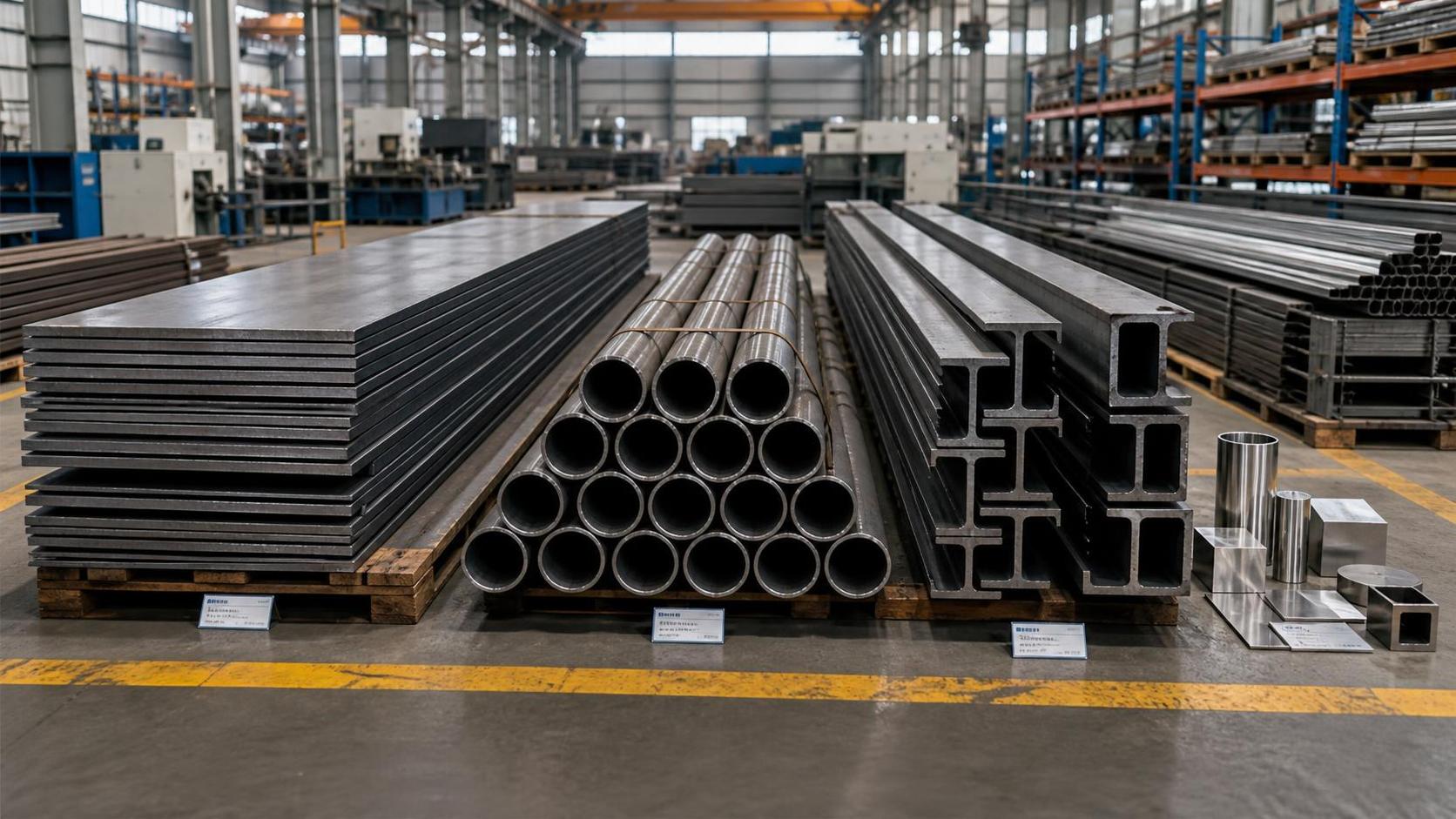
It usually starts with a simple request that turns into an argument in the meeting room: “Should we specify stainless steel, or is carbon steel enough?” On paper, stainless often looks safer because it sounds more durable and more resistant to trouble. But once drawings move toward procurement, fabrication, shipping, and site installation, that first instinct can become expensive, slow, or unnecessarily complicated.
This is a common problem in industrial projects, especially when the material is not being chosen for a single property but for a whole chain of requirements. A plate, tube, coil, or structural section may need to be cut, welded, coated, shipped, stored, and finally used in an environment that is not actually corrosive enough to justify stainless. In those situations, Carbon Steel often makes more sense than stainless steel—not because it is “better” in every way, but because it can be the more rational material once the real service conditions are examined carefully.
Where the confusion usually begins
Many teams fall into the same pattern. The project carries some moisture exposure, occasional outdoor handling, or a general concern about long-term durability. Stainless steel then becomes the default recommendation before anyone has clarified the actual exposure level, maintenance plan, fabrication route, or replacement philosophy. That choice can seem cautious, yet it may also ignore practical questions that matter just as much:
- Will the part be painted, galvanized, or otherwise protected anyway?
- Is the main demand structural strength rather than appearance or corrosion resistance?
- Will the component be welded repeatedly in a workshop with standard procedures?
- Is the service environment indoor, dry, intermittent, or easy to inspect?
- Does material availability affect lead time more than premium corrosion resistance helps the project?
Once those questions are asked, stainless steel stops being the automatic answer. A more grounded evaluation often shows that carbon steel fits the operating reality better.
The first useful comparison is not “which is stronger?”
A lot of selection discussions get stuck because the comparison starts with broad statements: stainless resists corrosion, carbon steel rusts, stainless costs more, carbon steel is common. None of that is wrong, but it is too broad to support a technical decision.
A better starting point is to compare failure modes in the actual application. If the main project risk is chemical attack, salt exposure, washdown conditions, or contamination concerns, stainless may be justified. But if the main risk is impact, load-bearing demand, fabrication complexity, or budget pressure under a controlled environment, carbon steel deserves serious consideration.
That change in perspective matters. Material selection is rarely about abstract material prestige. It is about whether the selected grade behaves properly in service without creating avoidable cost or process friction.
Situations where carbon steel often makes more sense
One of the clearest cases is structural use in non-aggressive environments. If the application is a frame, support, bracket, housing, reinforcement member, base structure, or general fabricated assembly used indoors or with manageable surface protection, carbon steel is often the practical choice. In these settings, the deciding factors are usually strength, ease of fabrication, coating compatibility, and procurement efficiency rather than high corrosion resistance.
Another common situation is when the product will already receive a secondary protective system. If the plan includes painting, powder coating, galvanizing, lining, or wrapping, the decision should be based on the total protection strategy instead of raw metal appearance alone. Choosing stainless for a component that will be covered anyway can add cost without changing the maintenance logic very much.
Carbon steel also becomes attractive when welding and forming are central to the project. Many fabrication shops are deeply familiar with carbon steel processing. Fit-up, cutting, bending, and welding procedures are often more straightforward in routine production. That does not mean stainless cannot be fabricated well; it means the workshop realities, consumables, heat control, finishing expectations, and operator familiarity can favor carbon steel when the application does not need stainless-specific performance.
Then there is supply chain practicality. When schedules are tight, teams often discover that material choice is not only about engineering merit but also about section availability, plate dimensions, tube range, coil sourcing, and export handling. For projects built around standard plates, tubes, coils, galvanized items, or structural profiles, carbon steel may align more smoothly with common sourcing channels and downstream processing.
Corrosion concern should be narrowed, not exaggerated
The strongest argument for stainless steel is corrosion resistance, but corrosion itself is not one single condition. There is a big difference between occasional humidity and continuous chemical exposure. There is a big difference between outdoor storage before installation and long-term marine service. There is a big difference between splash contact and full immersion.
If those conditions are not separated clearly, teams can overselect stainless simply to avoid uncertainty. A more useful approach is to define the exposure in plain terms:
- Is contact with water continuous, frequent, or only incidental?
- Are chlorides, acids, alkalis, or cleaning chemicals involved?
- Will damaged coating be easy to inspect and repair?
- Does surface staining matter functionally, or only visually?
- Is the equipment expected to remain in place for long periods with little maintenance access?
When the answers point to mild exposure with manageable maintenance, carbon steel often remains a sensible option. If the answers point to persistent corrosive conditions, stainless may still be the right choice. The key is that corrosion should be evaluated as a service condition, not as a vague fear.
Cost only matters if you connect it to the whole job
People often say carbon steel is cheaper, which is generally true at the material level, but price alone is a weak decision tool. The better question is whether the lower raw material cost stays meaningful after fabrication, surface treatment, transport, installation, and maintenance are considered.
Sometimes it does. In fabricated structures, large plate-based assemblies, common tubing systems, and general support steel, carbon steel can reduce material spending while also keeping processing familiar and supply options broad. If the environment allows conventional coating or galvanizing, the overall system can remain technically sound without moving to stainless.
Sometimes it does not. If a stainless selection avoids recurring surface protection work, contamination risk, or severe corrosion failure, then the higher initial material cost may be justified. The point is not that carbon steel always wins on cost. The point is that cost comparison should be tied to the actual lifecycle path of the component, not to a purchase order line alone.
Fabrication reality changes the answer more than many people expect
Selection decisions often look clean in a spreadsheet and messy in a workshop. This is where carbon steel frequently gains ground. If the project requires a lot of cutting, edge preparation, fit-up correction, tack welding, structural joining, or field adjustment, the practicality of carbon steel can become a strong advantage.
That advantage comes from routine familiarity rather than mystery. Many production environments are already optimized around carbon steel processing. Welding procedures, tooling wear expectations, straightening methods, and post-fabrication finishing are well understood. If the operating environment does not require stainless, there may be little reason to introduce additional complexity.
This matters even more for exported fabricated products and stock-based supply. Plate, tube, coil, galvanized products, and structural profiles often move through multiple handling stages before final use. When the selected material matches the common manufacturing and logistics path, coordination becomes easier. In that sense, material selection is partly an engineering decision and partly a process decision.
When stainless is chosen for the wrong reason
A recurring mistake is choosing stainless as a shortcut around unclear maintenance planning. If no one wants to define coating inspection intervals, touch-up procedures, storage controls, or surface preparation standards, stainless can look like an easy escape. But that only works if stainless is actually required by the service environment.
Another mistake is using appearance as a hidden specification. If the real concern is a clean metallic finish, low discoloration visibility, or customer perception, that should be stated directly. Otherwise the technical discussion gets distorted. A structural support inside a controlled industrial setting should not be judged by the same visual standard as a public-facing decorative component.
There is also a tendency to treat “outdoor use” as automatic justification for stainless. Outdoor exposure alone does not settle the question. Rain, sheltering, drainage, coating quality, abrasion, trapped moisture, and local contaminants all influence the answer. A painted or galvanized carbon steel design with good detailing may perform appropriately in many outdoor situations where stainless would add cost but not necessarily proportional value.
A more reliable way to decide
If you are facing the carbon steel versus stainless question, it helps to walk through the decision in a tighter sequence.
Start with the environment, but describe it precisely. Avoid labels like “harsh” or “normal” unless everyone agrees what they mean. Then define the mechanical role of the component. Is it mainly structural? Does it need impact tolerance? Is thickness available to support corrosion allowance or coating strategy?
After that, review the fabrication route. Will the material be heavily welded, cold-formed, machined, perforated, or field-modified? Some materials are excellent in service but inconvenient in production for a given shop setup. That is not a minor issue; it can influence quality consistency and total cost.
Then look at protection strategy. If carbon steel is being considered, ask whether paint, galvanizing, or another surface system is already acceptable in the project. If yes, the comparison changes significantly. If no coating maintenance is possible and the exposure is genuinely corrosive, stainless becomes easier to justify.
Finally, confirm sourcing practicality. A design that works only if special dimensions or unusual lead times are accepted may not be the best design. For projects relying on exported plates, tubes, coils, galvanized products, or structural profiles, the material decision should remain connected to realistic supply flow rather than only laboratory-level property comparisons.
So when does carbon steel make more sense?
It makes more sense when corrosion risk is limited or manageable, when strength and fabrication matter more than premium corrosion resistance, when protective coatings are already part of the plan, and when supply efficiency affects the project just as much as base material chemistry.
It also makes more sense when the component is utilitarian rather than appearance-driven, when workshop processes are built around standard steel fabrication, and when the service life expectation can be met through reasonable design detail and maintenance practice rather than material overselection.
That does not reduce the value of stainless steel. It simply puts stainless in its proper place. Stainless is a strong answer for the right environment. Carbon Steel is often the stronger decision when the job is structural, the exposure is moderate, and the project needs a balanced result across engineering, fabrication, and procurement.
In other words, the choice becomes clearer once the question changes from “Which material is more premium?” to “Which material best fits the actual use, the actual processing route, and the actual project constraints?” In many industrial evaluations, that is the moment carbon steel starts to make more sense than stainless steel.
Please give us a message
We welcome your interest in our products and welcome your request for customization. We look forward to establishing successful business relationships with new clients around the world and providing high-quality services for projects in diverse fields.


