
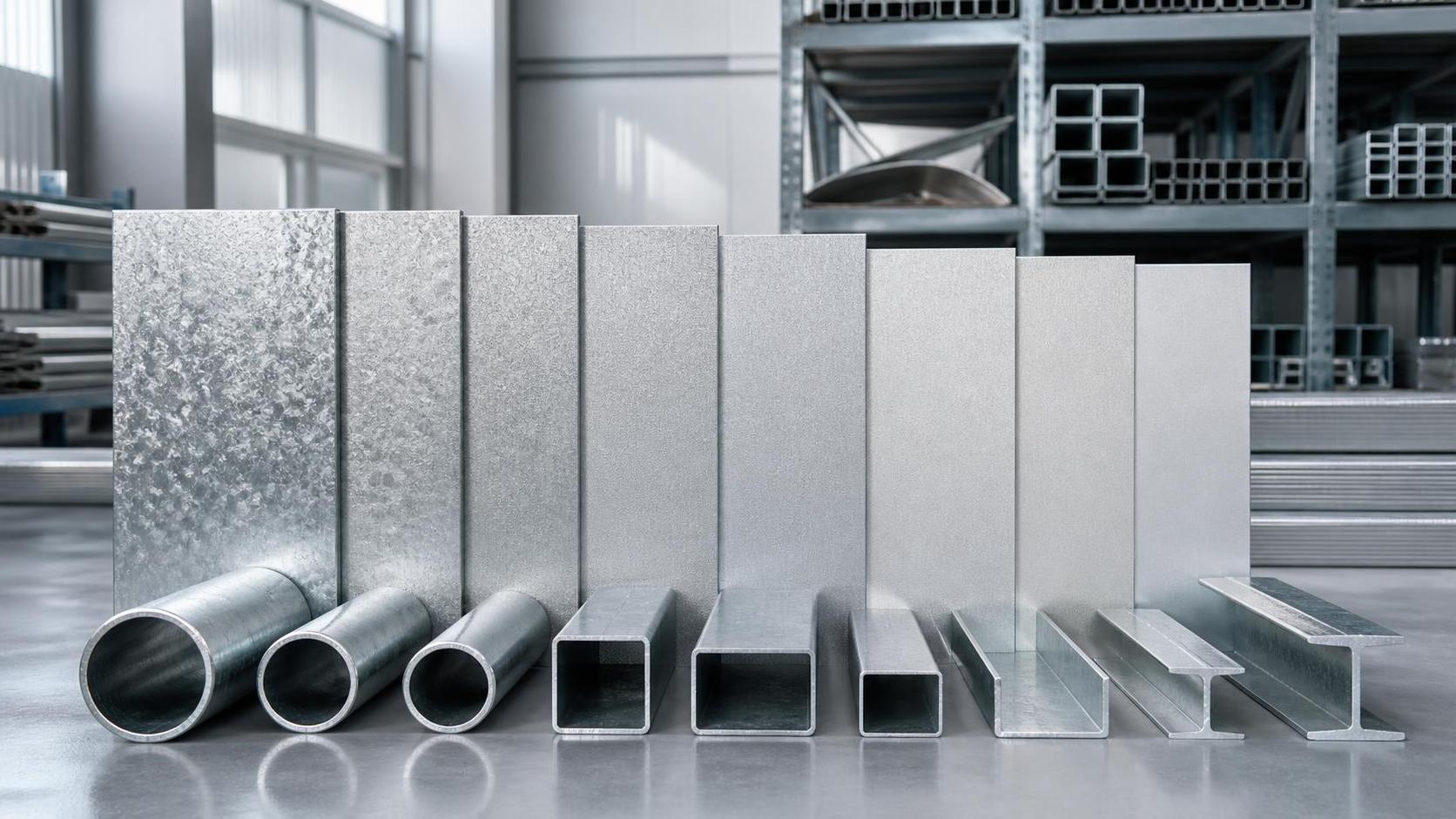
For quality control and safety teams, coating thickness is one of the most practical indicators of how long Galvanized Steel can resist corrosion in service. In most cases, a thicker zinc coating means a longer maintenance-free life, but that rule only works when thickness is matched to the real exposure environment, inspection standard, and failure risk. The right decision is not simply “choose the thickest coating available.” It is “choose a coating thickness that reliably covers the expected corrosion load without creating unnecessary cost or specification gaps.”
People searching for “What coating thickness means for galvanized steel corrosion life” usually want a direct answer to three questions: how thickness affects service life, how to verify it in inspection, and how to specify the right level for a given application. For QC personnel and safety managers, the issue is especially important because coating thickness affects product acceptance, asset durability, shutdown risk, and the likelihood of corrosion-related incidents over time.
Why coating thickness is such a strong predictor of corrosion life
Galvanized Steel resists corrosion because its zinc coating acts as both a barrier layer and a sacrificial layer. The barrier delays moisture, oxygen, and contaminants from reaching the steel substrate. At the same time, zinc corrodes preferentially, helping protect exposed steel even when small scratches or cut edges are present. This dual mechanism is the reason galvanized products remain widely used in structural, industrial, transportation, and utility applications.
Coating thickness matters because corrosion protection from zinc is consumable. As the zinc layer reacts with the environment, it gradually becomes thinner. All else being equal, more zinc means more material available to corrode before the underlying steel is exposed. That is why service life is often treated as roughly proportional to zinc coating mass or thickness under the same environmental conditions.
For quality and safety teams, this relationship is useful because it creates a measurable basis for predicting performance. If the environmental corrosion rate is known or reasonably estimated, and the actual zinc thickness is verified, the likely corrosion life can be estimated with much more confidence than by visual appearance alone. This helps teams move from assumption-based procurement to evidence-based specification and inspection.
Does thicker always mean better in Galvanized Steel selection?
In principle, thicker coatings generally provide longer corrosion life. However, thicker is not automatically better in every case. The correct thickness depends on where the steel will be used, how long it must remain functional, what maintenance access exists, and what the consequences of corrosion failure would be. A distribution warehouse interior does not need the same coating strategy as coastal guardrails, chemical plant structures, or agricultural equipment exposed to fertilizers and moisture.
There are also practical limits. A coating that exceeds what the design actually requires may increase cost without delivering meaningful risk reduction. In some fabricated parts, excessively variable or unsuitable coating buildup can affect fit-up, threads, assembly tolerance, or appearance. For that reason, good specification practice balances corrosion life, dimensional needs, applicable standards, and total lifecycle economics.
For safety-sensitive applications, the decision threshold should be stricter. If corrosion can compromise load-bearing capacity, electrical grounding continuity, walkway safety, containment reliability, or emergency access systems, the margin should reflect consequence of failure, not just initial purchase price. In these cases, coating thickness becomes part of a risk-control strategy rather than a simple material property.
How coating thickness connects to real service environments
The same thickness of Galvanized Steel can perform very differently depending on exposure conditions. A dry indoor environment with low pollutants may consume zinc very slowly, while marine air, industrial sulfur compounds, standing water, chloride contamination, and repeated wet-dry cycling can accelerate zinc loss significantly. This is why coating thickness cannot be interpreted properly without service context.
QC teams should pay particular attention to environmental categories such as indoor dry, rural outdoor, urban outdoor, industrial atmosphere, coastal atmosphere, splash zones, and chemically aggressive sites. Even within one project, different components may face very different exposures. Roof framing, floor supports, drainage areas, anchor systems, and outdoor edge details often corrode at different rates because of moisture retention and contaminant deposition.
Safety managers should also consider hidden corrosion conditions. A galvanized member may look acceptable in open air but experience faster degradation inside crevices, lap joints, enclosed humid spaces, or areas subject to trapped debris. In these cases, nominal coating thickness alone is not enough. The design and drainage conditions matter because they determine how aggressively the coating is consumed in service.
What quality control teams should actually measure
When assessing Galvanized Steel, teams should separate three related but different concepts: coating thickness, coating mass, and coating uniformity. Different standards may express requirements in micrometers, grams per square meter, ounces per square foot, or minimum average values over a specified test area. Confusion between these units is a common cause of procurement and inspection mistakes.
Thickness should be verified using appropriate methods such as magnetic thickness gauges, metallographic cross-section methods, or gravimetric approaches, depending on the product form and the governing standard. In routine factory or receiving inspection, calibrated magnetic gauges are often the most practical choice, but the method must match the product geometry and coating type. Flat sheet, tube, structural profile, and fabricated assemblies may each present different measurement considerations.
Uniformity is just as important as average thickness. A batch can technically meet an average requirement while still containing local thin spots that become early corrosion initiation points. For safety-critical service, inspection plans should define sampling frequency, edge and corner attention, acceptance criteria, and how nonconforming measurements are resolved. A good QC process does not only record numbers; it identifies where corrosion risk is concentrated.
Why standards matter more than nominal claims
One of the most frequent mistakes in sourcing Galvanized Steel is relying on generic supplier statements such as “heavy zinc coating” or “high corrosion resistance” without tying those claims to a specific standard. Quality teams need to check which standard applies to the product category, what coating designation is required, and whether the inspection report reflects that exact basis. Without that, thickness comparisons may be misleading.
Different products may be galvanized by continuous hot-dip processes, batch hot-dip galvanizing, electro-galvanizing, or other coating routes. These processes can produce very different coating structures, thickness ranges, and field durability. A thin electro-galvanized coating may be suitable for controlled indoor use but inadequate for severe outdoor exposure where a heavier hot-dip coating is expected. The words “galvanized” and “Galvanized Steel” do not automatically guarantee equal corrosion life.
For procurement and compliance control, the specification should state the applicable standard, required coating designation, inspection method, and acceptance basis. This reduces disputes at receiving inspection and prevents the common problem of comparing different galvanizing systems as if they were interchangeable. In practice, a clear standard reference is often more valuable than a broad promise of durability.
How to estimate whether coating thickness is enough for the job
The most useful way to think about corrosion life is to compare available zinc thickness with expected zinc consumption in the actual environment. If the site is mild and dry, even a moderate coating may deliver a long service period. If the site is coastal, polluted, or frequently wet, the same coating may be consumed much earlier. That is why the question is not “what is a good thickness?” but “what thickness is appropriate for this exposure and service life target?”
For QC and safety teams, a practical review should include five points: service environment, required design life, maintenance access, consequence of failure, and applicable compliance expectations. A handrail in a public outdoor area may need a different margin than a cosmetic interior partition. A support frame near salt exposure may justify a heavier coating or a duplex system because inspection and replacement are disruptive or safety-critical.
It is also useful to ask whether the component will experience abrasion, impact, cut-edge exposure, or field modification after delivery. Mechanical damage can reduce effective coating thickness locally, which changes real corrosion performance. If the application involves handling wear, bolted assembly, transport damage, or site cutting, the specified thickness should account for those realities rather than laboratory assumptions alone.
Common failure points that thickness alone does not solve
Although thickness is fundamental, corrosion life is not controlled by thickness alone. Poor drainage, design crevices, incompatible contact materials, aggressive chemical exposure, and damaged surfaces can all shorten performance. In quality investigations, teams often discover that “premature failure” was caused by installation details or service conditions that were never reflected in the original material specification.
Edges, weld areas, threads, fastener interfaces, and field-drilled locations deserve special attention. Even with adequate average coating thickness, these details can behave differently from broad flat surfaces. Safety managers should ensure inspection checklists include such points because they are common locations for localized corrosion that later affects structural reliability or safe access conditions.
Another limitation is the assumption that all environments are stable. In reality, exposure can change during operation. A facility may add chemical processes, alter washdown frequency, introduce deicing salts, or modify ventilation. When conditions become more aggressive, the originally acceptable coating thickness may no longer deliver the intended corrosion life. Periodic review is therefore part of responsible asset control.
What this means for inspection, procurement, and risk control
For inspection teams, the takeaway is simple: do not treat coating thickness as a box-check item. Treat it as a predictor of service life that must be interpreted together with environment and use. Receiving inspection should confirm not only that the numbers meet the purchase specification, but also that the specification itself was appropriate for the intended duty. A compliant product can still be the wrong product for the risk.
For procurement teams working with suppliers of Galvanized Steel, the most effective approach is to define the application clearly and request documentation that matches it. That includes coating designation, test method, inspection records, and product form details. Suppliers with broad product capability, including galvanized coils, plates, tubes, and structural profiles, are in a better position to align coating solutions with actual project requirements rather than offering a one-size-fits-all answer.
For safety management, thicker coatings are often justified where corrosion failure would create injury risk, unplanned shutdown, or expensive access work later. The lowest initial material cost is rarely the lowest total cost when corrosion leads to replacement, incident exposure, or emergency maintenance. In that sense, coating thickness is not just a material variable; it is a control measure linked to operational reliability.
How to make better decisions on Galvanized Steel thickness
A sound decision process starts with the service environment and the expected life of the component. From there, teams should identify the appropriate galvanizing standard, required coating range, and inspection method. Next, they should review fabrication details that may create thin spots, drainage issues, or damage during handling and installation. Finally, they should define acceptance criteria that are realistic, measurable, and tied to risk level.
For many organizations, the biggest improvement comes from moving away from generic material descriptions in purchase documents. Instead of simply ordering “Galvanized Steel,” specify the product type, coating requirement, standard reference, exposure class, and any safety-critical concerns. This gives quality personnel a clear basis for acceptance and gives suppliers a clear basis for manufacturing and documentation.
Where the application is uncertain or particularly demanding, early consultation with a technically capable supplier can reduce mis-specification. Companies involved in global steel supply and export, such as Handong Rongxin Metal Manufacturing Co., Ltd., often support projects across galvanized products, plates, tubes, coils, and structural profiles. That broader product perspective can help match corrosion protection strategy to both engineering performance and supply practicality.
Conclusion
Coating thickness is one of the clearest indicators of how long Galvanized Steel can resist corrosion, because zinc protection is gradually consumed during service. In general, more thickness means more corrosion life, but only when evaluated against the actual environment, expected design life, and consequence of failure. For QC and safety teams, the key is not to chase the highest number blindly. It is to specify, verify, and inspect thickness in a way that matches real operating risk.
When thickness is understood as a service-life variable rather than a label on a certificate, decisions become more accurate. Inspections improve, procurement becomes more defensible, and corrosion-related failures are less likely to surprise the operation later. That is the practical value of understanding what coating thickness means for galvanized steel corrosion life.
Please give us a message
We welcome your interest in our products and welcome your request for customization. We look forward to establishing successful business relationships with new clients around the world and providing high-quality services for projects in diverse fields.


